


Zap Surveys: Earn Easy Money
4.319.62K Reviews
App Specs
- Version
- 4.06.00
- Updated On
- License
- Free
- Downloads
- 1,000,000+
- Developer
- Zap Surveys, LLC
- Categories
- Lifestyle
- Platform
- Android
Screenshots
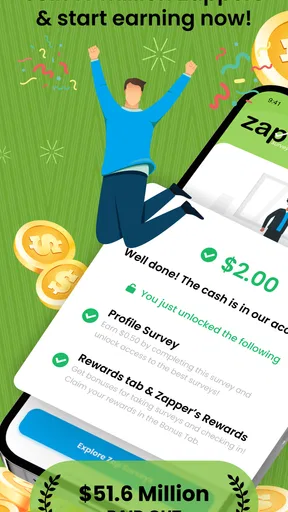
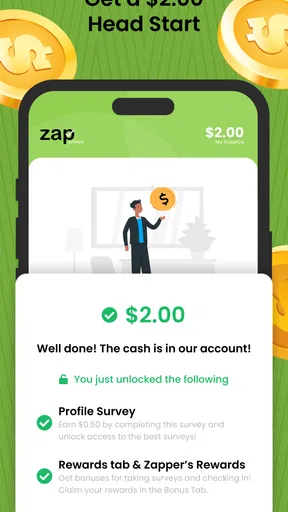
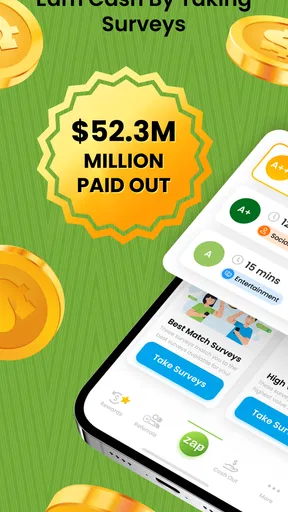
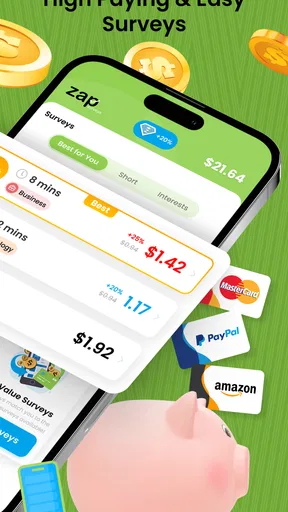
 Analysis by AppCompare
I approached Zap Surveys: Earn Easy Money as a small side-income tool rather than a replacement for regular work. That distinction matters immediately. The app belongs to the lifestyle category and focuses on paid online surveys, with rewards that can be exchanged for gift cards or cash through PayPal and Visa. In my experience, its appeal is strongest when I treat spare minutes as spare minutes: waiting for an appointment, sitting on public transport, or filling a quiet gap between tasks.
The first impression is easy to understand. You open the app, look through available survey invitations, choose one that fits your time, and work toward a reward. There is no complicated project setup or specialized knowledge to learn. That simplicity is the reason I can imagine recommending it to a friend who wants to try survey earning without committing to a large, elaborate platform.
Still, the important question is not whether the idea is attractive during the first few days. Most survey apps feel useful when they are new. The real test is whether the routine remains worthwhile after the novelty disappears, when invitations are less exciting and you have already answered many similar questions. My overall view is cautiously positive: this is a convenient option for occasional earning, but it rewards patience and realistic expectations more than constant use.
What the first week feels like
During the first week, the app has a natural pull because every available survey feels like a possible opportunity. I found the basic rhythm straightforward: check the dashboard, read the invitation, decide whether the estimated effort seems reasonable, and continue only when the exchange feels fair. That decision-making step is more important than it sounds. A survey can be technically short but still feel tiring if it repeats the same opinions or asks for highly specific personal preferences.
The app is free, which removes the biggest barrier to trying it. It is also marked for Everyone, so the presentation is accessible rather than aimed at a narrow professional audience. The developer is Zap Surveys, LLC, and the product has been available since early 2019. That history, together with a 4.3 average from around 166 thousand ratings and more than a million installs, suggests that it has reached a substantial audience rather than being a brand-new experiment.
I would not interpret those figures as a promise that every user will receive the same survey flow. Survey availability naturally depends on who you are, where you live, and which research audiences are currently needed. In practical terms, two people can open the app at the same time and see different opportunities. That is one reason I prefer judging it by flexibility and ease of use instead of expecting a fixed daily income.
A realistic first-week scenario is a commuter with ten minutes before a train. The app can turn that otherwise unused time into a chance to complete a questionnaire. If the survey ends unexpectedly or does not match the user, the lost cost is mainly time and attention. That makes it less stressful than an app requiring an upfront purchase, but it also means I would never start a survey when I need to be somewhere immediately.
Worth Reading Before You Choose

EA SPORTS FC Mobile 26 Is a Bigger Football Game, but It Takes Time

Flipboard Shows What News Apps Must Do Beyond the Feed

Switching to Android Auto Means Rethinking Your Driving Routine

Google Calendar Makes a Crowded Week Easier to Manage

Ludo King Makes the Most of the Minutes Between Plans

Baby Panda World Brings Quick Play to Modern Phones, but Its Game Library Feels Busy
My first practical tip is to read the opening questions carefully instead of rushing through them. Early screening can determine whether a survey is suitable, and careless answers can make the session feel wasted. I also recommend keeping the app for moments when you can concentrate. Survey answers are usually more reliable when you are not multitasking, cooking, or trying to follow a conversation at the same time.
How rewards fit into everyday use
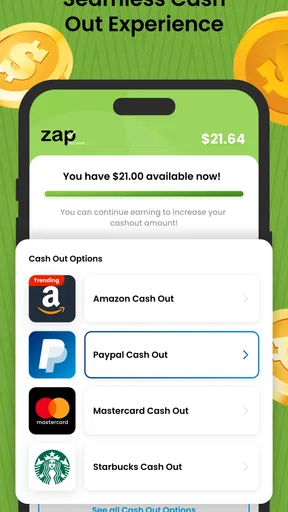
The reward design is easy to understand: completed paid surveys contribute toward gift cards or cash through PayPal and Visa. That range is useful because it gives different kinds of users a reasonable destination for their earnings. Someone who already uses PayPal may prefer cash, while another person may value a gift card for a planned purchase.
The key trade-off is that the reward is not the same thing as immediate spending money. You still need to complete enough suitable surveys and follow the app’s redemption process. I see the balance as a small, gradual benefit rather than something to depend on for bills. If you need predictable earnings on a schedule, a conventional part-time job or a freelance marketplace is a better fit.
A less obvious way to use the app is to set a personal stopping rule. For example, I might decide that I will only open it during an existing waiting period and will stop when that period ends. This prevents the app from turning into a constant search for the next invitation. It also makes the value easier to judge because I can ask whether the rewards justify time that would otherwise have been idle, rather than comparing them with a full hourly wage.
What changes after the novelty fades
After the first week, the emotional side of the experience changes. New users tend to check frequently because the possibility of a fresh survey is interesting. After several sessions, repeated screening questions and familiar survey formats can make the process feel more mechanical. That is normal for this category, but it affects whether the app deserves a permanent place on your phone.
For me, the strongest recurring value comes from using it opportunistically. I would not build my day around opening Zap Surveys. Instead, I would check it at natural points, such as while waiting for an appointment or during a quiet break. That approach protects the app’s main advantage: it can add a little value to time that was already available.
There is also a useful psychological boundary here. When I start comparing each survey with what I could earn elsewhere, the app becomes frustrating. When I compare it with doing nothing during a short wait, it becomes more appealing. Neither comparison is universally correct, so the right choice depends on your alternative use of time.
Month-to-month value and the effort of keeping it useful
Longer-term value depends on habit more than excitement. The app is most likely to remain useful for someone who checks it occasionally, completes suitable surveys, and remembers that availability can vary. It is less suitable for a person who expects a steady stream of equally attractive tasks every day.
I would create a simple monthly routine rather than leaving notifications or checking constantly. A quick review a few times a week is enough to see whether the app is still producing opportunities that fit my schedule. If I notice that I am opening it repeatedly without completing anything, that is a sign to reduce the habit rather than push harder.
This is where the app differs from many usual alternatives. Cashback services can reward purchases you were already planning, but they are less useful when you are not shopping. Microtask platforms may offer a wider variety of work, but they can involve more complicated instructions and a greater time commitment. Traditional survey websites can be comfortable on a computer, while this app is better suited to short mobile sessions. None is automatically superior; each one matches a different kind of spare time.
Zap Surveys has an advantage over a more involved side-hustle platform because the entry point is simple. I do not need to search for a client, prepare a portfolio, or learn a specialized tool. The disadvantage is that surveys are shaped by demand from the research process, so I have less control over the kind of work available. That trade-off is central to deciding whether it will stay useful month after month.
One concrete workflow I found sensible is to separate “available now” from “worth doing.” I can scan the list quickly, then reject anything that seems too long for the time I have or too repetitive for the reward. This small filter helps preserve attention. The app becomes a selective tool instead of a queue that I feel obligated to clear.
Maintenance without letting it take over
The maintenance burden is fairly light in concept, but it still has a few parts. I need to keep the app available, check for suitable opportunities, answer consistently, and remember how I want to receive rewards. That is manageable for an occasional user. It becomes more tiring when I treat every invitation as urgent.
The current version is 4.06.00 and supports Android starting with version 5.0, which makes it accessible to many older devices. That does not guarantee an identical experience on every phone, but it does make the app practical for people who are not using the newest hardware. I would still keep enough free attention for the survey itself, because a technically compatible device does not make rushed answers a good idea.
My second practical tip is to protect the quality of your profile information. Survey matching works best when your answers remain consistent over time. I would avoid guessing simply to get through a screening page. A short-term attempt to qualify for more surveys can create a less trustworthy experience later, while honest answers give the system a clearer idea of which invitations are relevant.
My third tip is to choose the redemption route before your balance becomes meaningful. If you prefer PayPal, gift cards, or Visa, knowing that preference helps you evaluate whether the available reward options suit your needs. It also prevents me from treating every accumulating balance as equally useful. A reward is valuable only if I can actually use it in the way I expect.
Privacy and attention should also be part of the maintenance decision. Survey apps ask users to share opinions and demographic information as part of the research process. I would read each question carefully and skip participation whenever the subject feels too personal for my comfort. The possibility of earning a small reward is not a reason to ignore my own boundaries.
Where fatigue begins
The first source of fatigue is repetition. Many surveys revolve around familiar themes such as shopping habits, media preferences, products, or general opinions. Even when the topics change, the structure can feel similar. That does not make the app defective, but it limits how long I can use it in one sitting before the activity starts to feel like work.
The second source is uncertainty. I may open the app with a few minutes available and find nothing that fits, or begin a questionnaire and discover that I am not the intended participant. Because the app depends on survey demand, I cannot plan a precise routine around it. Users who dislike variable workloads should know this before committing time.
The third source is the temptation to chase small opportunities. A user can spend too long refreshing, comparing invitations, or hoping for something better. In my judgment, this is the biggest long-term risk. The app works best when it stays subordinate to the rest of the day. Once it becomes a habit of constant checking, its convenience starts to disappear.
There is also a difference between financial and motivational fatigue. Even if the reward system functions as intended, the process may not feel satisfying when the questions are dull. Some people enjoy giving opinions and watching a balance grow; others will find the repetition unbearable after a few sessions. I would test that personal reaction during the first week instead of assuming that a free app is automatically worth keeping.
For that reason, I would skip this app if I need guaranteed income, dislike questionnaires, or have very little patience for screening. I would also choose another option if I already have a reliable way to earn more from the same spare time. A short freelance task, a cashback reward on a planned purchase, or a focused learning activity may provide better value depending on the situation.
Who is most likely to keep using it
The best match is someone with irregular pockets of free time and modest expectations. Students, commuters, people waiting between appointments, and users who enjoy sharing opinions may find a comfortable place for it in their routine. The app is especially reasonable for someone who wants a free starting point and does not want to manage a complicated side-income system.
It can also suit a person who prefers flexible rewards rather than a single limited redemption method. The ability to work toward gift cards or cash through PayPal and Visa gives the result more practical value than a reward that only works in one narrow setting. Even so, I would treat those choices as convenience, not as evidence that the app can replace dependable earnings.
Someone who wants a fixed daily target should look elsewhere. The same is true for a user who expects every minute to produce a predictable return. Survey availability is not fully under the user’s control, and that makes the app fundamentally different from paid work where the task queue and rate are clearer.
My long-term verdict
After looking beyond the first-week novelty, I think Zap Surveys earns a place on a phone when it is used as a controlled spare-time activity. Its strongest qualities are the free entry point, simple survey format, and choice between gift cards and cash through PayPal and Visa. Its weaker side is the uncertainty: opportunities can vary, screening can interrupt a session, and repeated questionnaires can wear down motivation.
The app’s public reach is notable, with a 4.3 average and around 166 thousand ratings, while its age rating of Everyone keeps the intended audience broad. Those details make it look approachable, but they should not replace a personal test. The central question is whether your own unused minutes are worth exchanging for survey participation.
My recommendation is to install it with a clear boundary: use it during waiting time, set a reasonable stopping point, and redeem rewards according to what you genuinely use. Do not refresh endlessly, do not count on a fixed income, and do not continue surveys that make you uncomfortable. That approach keeps the maintenance low and makes the experience easier to judge honestly.
My final take: it is a decent occasional earning app, not a dependable job. I would keep it if I enjoyed short questionnaire sessions and regularly had idle time. I would remove it if checking for surveys became a chore or if another activity produced better value. The lasting benefit is real but modest, and it appears only when the app remains a small part of the routine instead of becoming the routine itself.
Pros
- Short surveys are easy to complete during spare moments.
- Clear progress tracking helps monitor earnings and survey activity.
- Multiple payout choices may suit different users and locations.
- The app is lightweight and generally simple to navigate.
- New survey alerts can help users find available opportunities quickly.
Cons
- Survey availability can vary greatly by location and profile.
- Some surveys screen users out after several questions.
- Earnings per survey are often modest compared with the time required.
- Payout processing may take time after reaching the minimum threshold.
- Personal and demographic information is required to match surveys.
FAQs for Zap Surveys: Earn Easy Money
What is Zap Surveys: Earn Easy Money, and how does it work?
Zap Surveys is a rewards app that lets you earn money or other available rewards by completing surveys and, depending on your location, participating in additional research activities. After creating an account, the app presents surveys based on your profile. Each survey shows an estimated reward and completion time, although eligibility can vary and some surveys may end early if you do not match the requested audience.
How much money can you make with Zap Surveys?
Your earnings depend on the number of surveys available, your demographic profile, your location, and how consistently you use the app. Some surveys offer only small amounts, while others may pay more for longer or specialized research. Zap Surveys should generally be viewed as a way to earn occasional extra money rather than a replacement for regular employment, because survey availability and rewards are not guaranteed.
How do you receive rewards from Zap Surveys?
Zap Surveys may offer cash payments or other redemption options, depending on your country and the current choices displayed in the app. Before completing surveys, it is worth checking the rewards and withdrawal section to understand available methods, minimum requirements, and processing times. Requirements can change, and some users may be asked to verify account details before a payment is processed.
Is Zap Surveys safe and legitimate to use?
Zap Surveys is designed as a market-research rewards platform, but users should still review its privacy policy and permissions before registering. Surveys may request personal or demographic information because that data helps determine eligibility. Avoid entering sensitive information that is not necessary, use a strong unique password, and download the app only from an official store or the developer’s verified source.
Why do I sometimes get disqualified from Zap Surveys surveys?
Survey disqualifications are common in paid-survey apps and do not necessarily indicate a problem with your account. Researchers usually need responses from specific age groups, locations, occupations, purchasing habits, or other categories. You may answer initial screening questions and then be told that the survey is full or that you do not qualify. Completing your profile accurately can improve matching, but it cannot guarantee acceptance.


